The future of learning and collaboration enabled by 5G technology
The future of learning and collaboration enabled by 5G technology
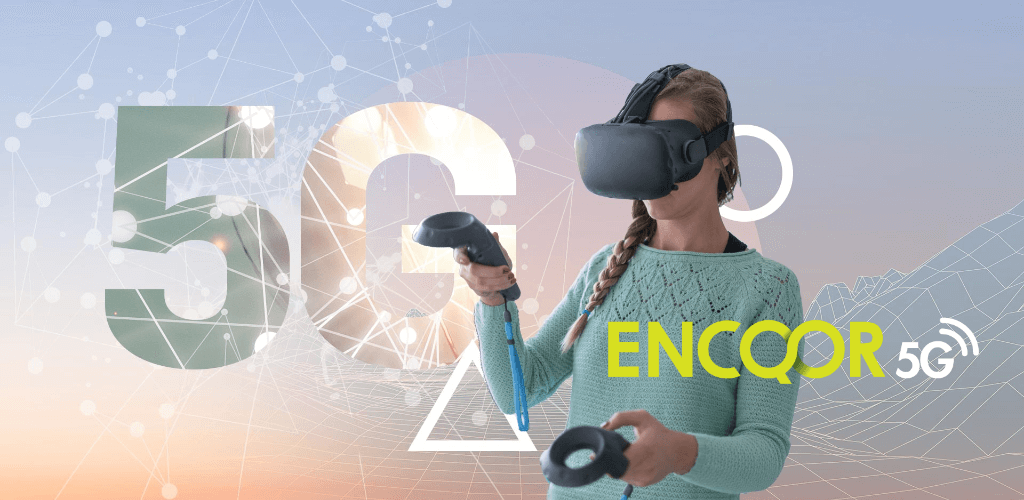
“Is that you in my headset? Nice to see you!”
In her seminal LinkedIn learning tutorial, Samantha Calamari describes the importance of using multimedia tools to support e-learning. “Not everyone will have a super fast internet connection,” she warns instructional designers. “Don’t leave those participants behind.”
But what if we could imagine a world where multimodal learning wasn’t dependent on lagging internet? In their presentation at Hub MTL, LCILX discusses a collaboration between LCILX and ENCQOR: a 5G research project designed to test the potential of and explore what virtual collaborative spaces could look like in an educational context. Access to 5G technology is shown to be a determiner of educational success – with 5G, learners can access programs that previously would not have been available due to slower internet speed. LCILX advocates for the democratization of life-long learning by embracing new technologies such as VR, AR, 3D objects, and 360o objects, streamlined by access to powerful internet speed.
By designing the first 5G-enabled SMART Campus of tomorrow, LCILX shows the future of learning will be both immersive and inclusive in 5G. Specifically, LCILX discusses their active research into the 5G-enabled classroom, examining the impact of 5G on their corporate learning initiatives. Utilizing StellarX, a new VR-authoring platform developed by OVA, they designed a VR-based role-play and learning activity, then tested it with 5G in the classroom. The results are fascinating: virtual collaboration and learning in 5G not only fills a gap in an environment that does not allow us to move as easily as before, but also has the potential to break down barriers and open the door to immersive infrastructures and global collaboration scenarios. For example, these scenarios could be an immersive workshop, or even a virtual role play supported by an AI reading emotion.
LCILX’s presentation discusses the results of their study and recommendation on how to capitalize on access to 5G in learning. They learned that 5G is not infallible. Among other things, while the high capacity 5G mobile network can achieve upload and download speeds up to 100 times faster, in addition to being able to reduce latency by 10 to 50 times compared to current 4G, they observed that 5G is not yet optimized, which caused some issues regarding the deployment of high-quality content.
However, LCILX maintains that the benefits outweigh the drawbacks. The activities enabled by 5G have unparalleled impact on the quality and engagement offered to users as we train the workforce of today and tomorrow. LCILX will continue its research into the applicability of 5G in learning spaces, keeping at the cutting edge of e-learning technologies.
For more information, please contact us at lcilx@lcieducation.com.